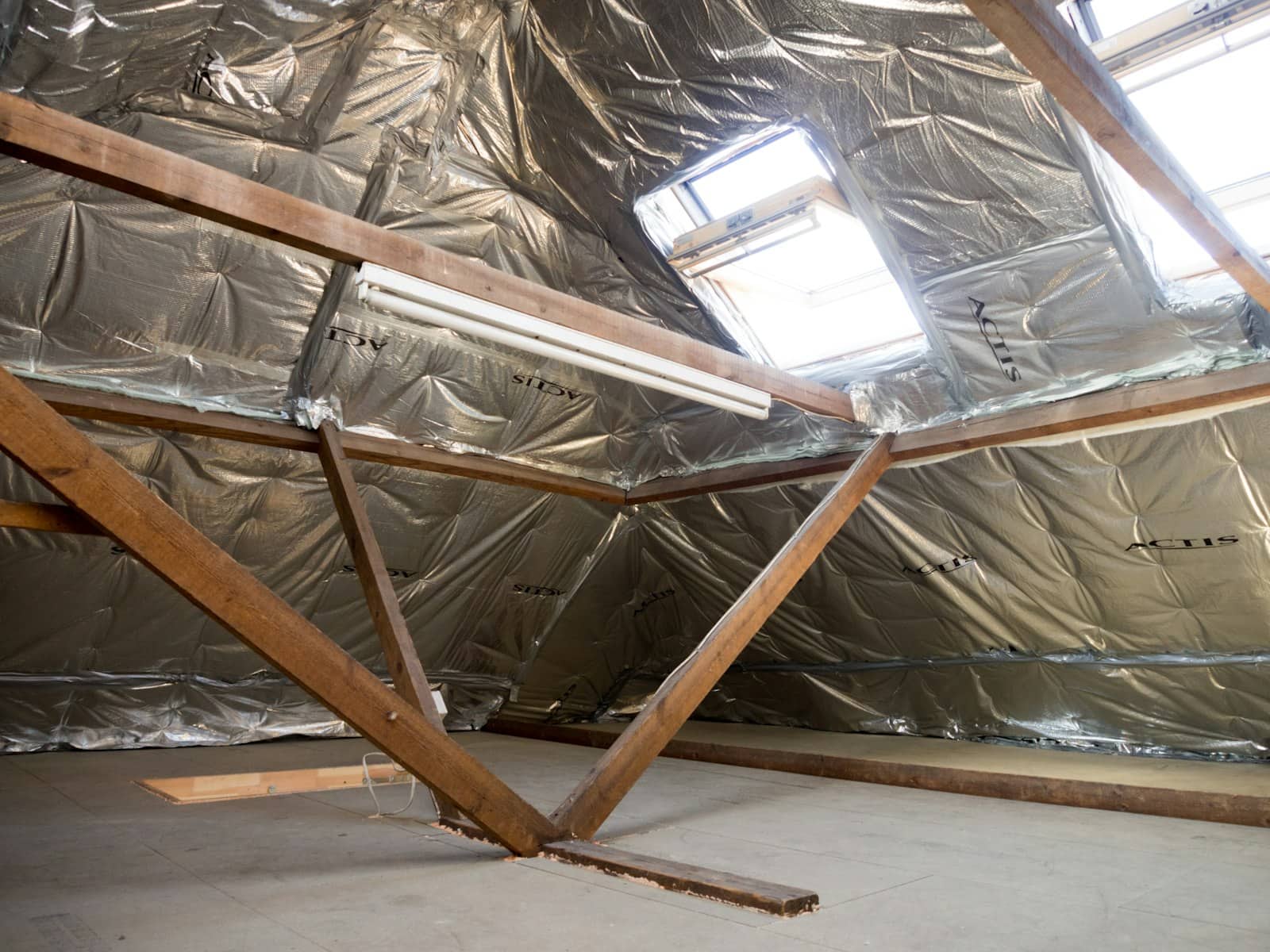
Texas heat doesn’t care how hard your AC works. If your attic insulation is thin, settled, or missing — and your house has air leaks at every penetration — you’re paying to cool the outdoors. Proper insulation and air sealing change that math fast.

Snapshot
Category
Efficiency upgrades
Focus
Keep conditioned air inside
Next step
Consultation
Overview
Your AC isn’t the problem — your envelope is.
Hot attic air presses down through gaps around light fixtures, plumbing chases, and the attic hatch. Outside air pushes in around outlets, windows, and where the framing meets the foundation. Your system runs constantly trying to keep up. Air sealing plugs those highways first. Then blown-in insulation fills around wires, pipes, and joists to create a continuous thermal blanket. The result: rooms even out, your system cycles less, and you stop fighting the thermostat.
What a good insulation and air sealing plan should cover
Attic air sealing plugs the biggest leaks first
Before any insulation goes in, every penetration in your attic floor gets sealed — wiring holes, plumbing stacks, recessed lights, top plates. These are the highways for hot attic air to pour into your living space.
Blown-in insulation fills every gap evenly
Unlike batts that leave gaps and sag over time, blown-in insulation fills around wires, pipes, and joists for continuous coverage. It reaches spots batts simply can’t.
Measurable comfort difference room to room
Rooms that used to be five or ten degrees off from the rest of the house even out. Your system cycles less, your bill drops, and you stop fighting the thermostat.
How insulation and air sealing should be approached
1
Measure existing R-value and map every air leakage path
We measure your current insulation depth and condition, then use a blower door to identify where air is escaping — top plates, wiring penetrations, plumbing chases, recessed lights, the attic hatch. The gap between what you have and what your Texas climate zone requires (R-38 to R-60) determines the plan.
2
Seal the attic floor before any insulation goes in
Every penetration gets sealed with fire-rated caulk or spray foam — wiring holes, plumbing stacks, HVAC chases, top plates, can lights. This is the step most contractors skip because it’s slow and invisible. It’s also the step that makes the insulation actually work, because insulation doesn’t stop air — it only slows heat.
3
Blow insulation to target depth and retest with a blower door
Blown-in cellulose or fiberglass fills around every wire, pipe, and joist for continuous coverage. Depth markers verify thickness across the attic. A post-install blower door test confirms the air sealing hit its target CFM50 number — you see the before and after side by side.
Insulation and Air Sealing questions
Talk to an advisor
The goal is a clearer recommendation, a cleaner plan, and the right conversation first.